
[Market Memo] Orange Man Attempted Chinese Transceiver Ban
A not-so-gentle prod to the hypsercalers.

Irrational Analysis is heavily invested in the semiconductor industry.
Positions will change over time and are regularly updated.
Opinions are authors own and do not represent past, present, and/or future employers.
All content published on this newsletter is based on public information and independent research conducted since 2011.
This newsletter is not financial advice and readers should always do their own research before investing in any security.
Feel free to contact me via email at: irrational_analysis@proton.me
Emergency memo on the Reuters report today and the chaos that followed.
There is a lot of nuance and complexity here.
Will also be snipping some of the work by my friends at FUNDA.

Contents:
Reuters Report Re-Cap
Overview Featuring Funda
Practical Transceiver Engineering
Stocks, Trading, Market Vibes, and You
[1] Reuters Report Re-Cap
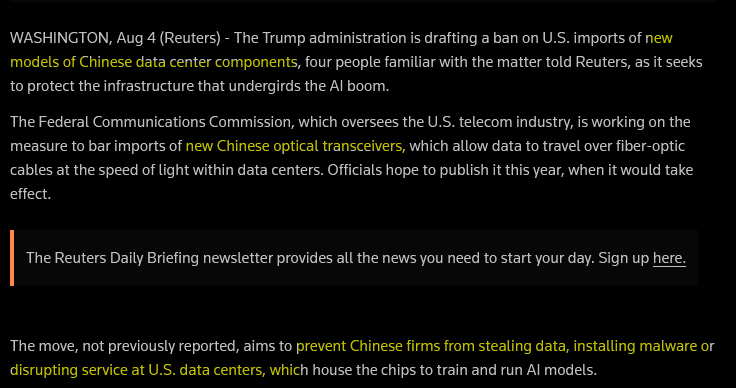
This would allegedly only effect new transceiver models. Everyone has all the flavors of 1.6T qualified so not a huge deal.
This “stealing data” line is total bullshit. Transceiver is just a PHY that converts electrical to optical and back. All data is encrypted at the host endpoint. Transceivers cannot install malware unless the datacenter operator is completely incompetent. Arbitrary code execution via CMIS would need next-level opsec failure.
This same line of nonsense argument used again Huawei remote-radio-heads (RRH) in 5G networks. Just admit you want to ban Chinese stuff for economic reasons. That’s fine. I hate these obviously bullshit security excuses.

Divyansh Kaushik of Beacon Global Strategies is a complete fucking moron who understands nothing about how transceivers or networks function.
You know what does pose a risk? Brain-dead fake experts who spout verifiably false nonsense and drive policy.
Tell me, if data is encrypted and decrypted at host endpoints, how does the transceiver sniff data? How can a transceiver install malware over protected CMIS registers which link to a BMC bus which is itself another layer of security? Idiot do you even know what CMIS is?
https://www.oiforum.com/wp-content/uploads/OIF-CMIS-05.4.pdf
CMIS is the framework in which a transceiver interacts with a host system.
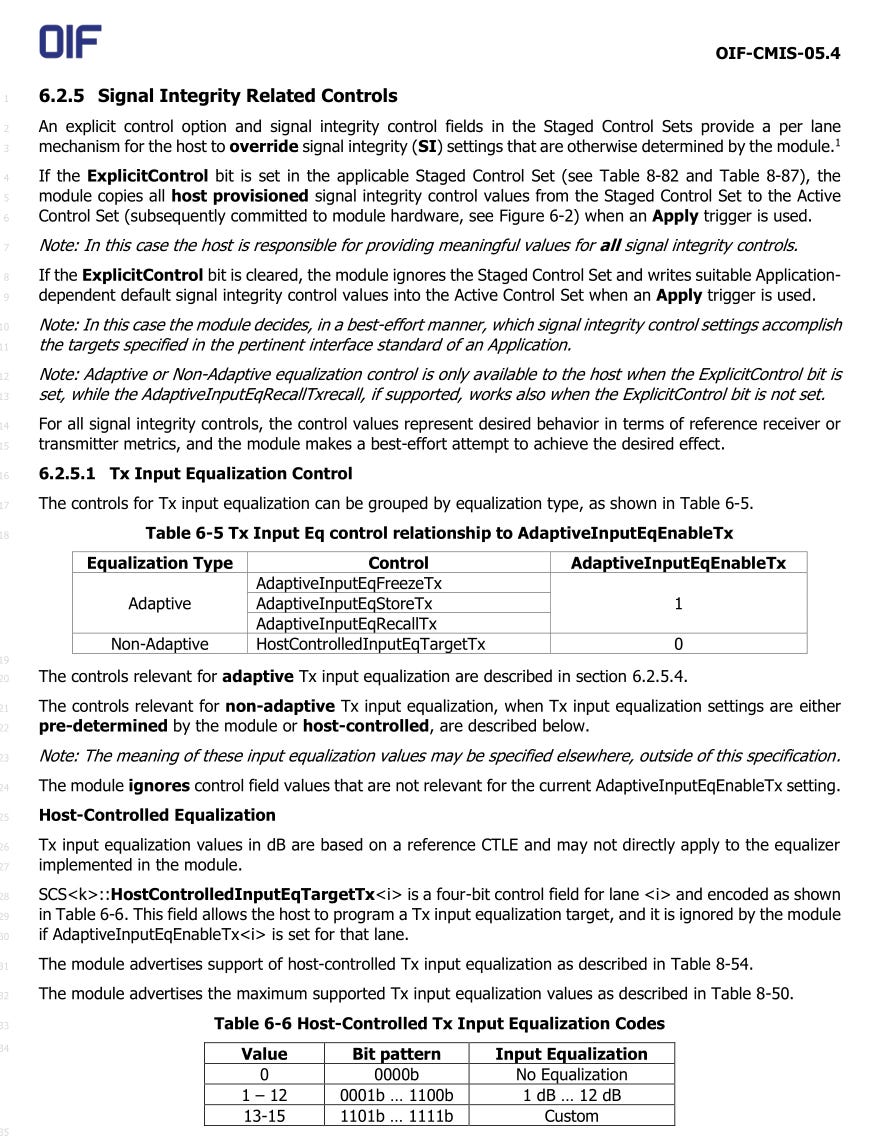
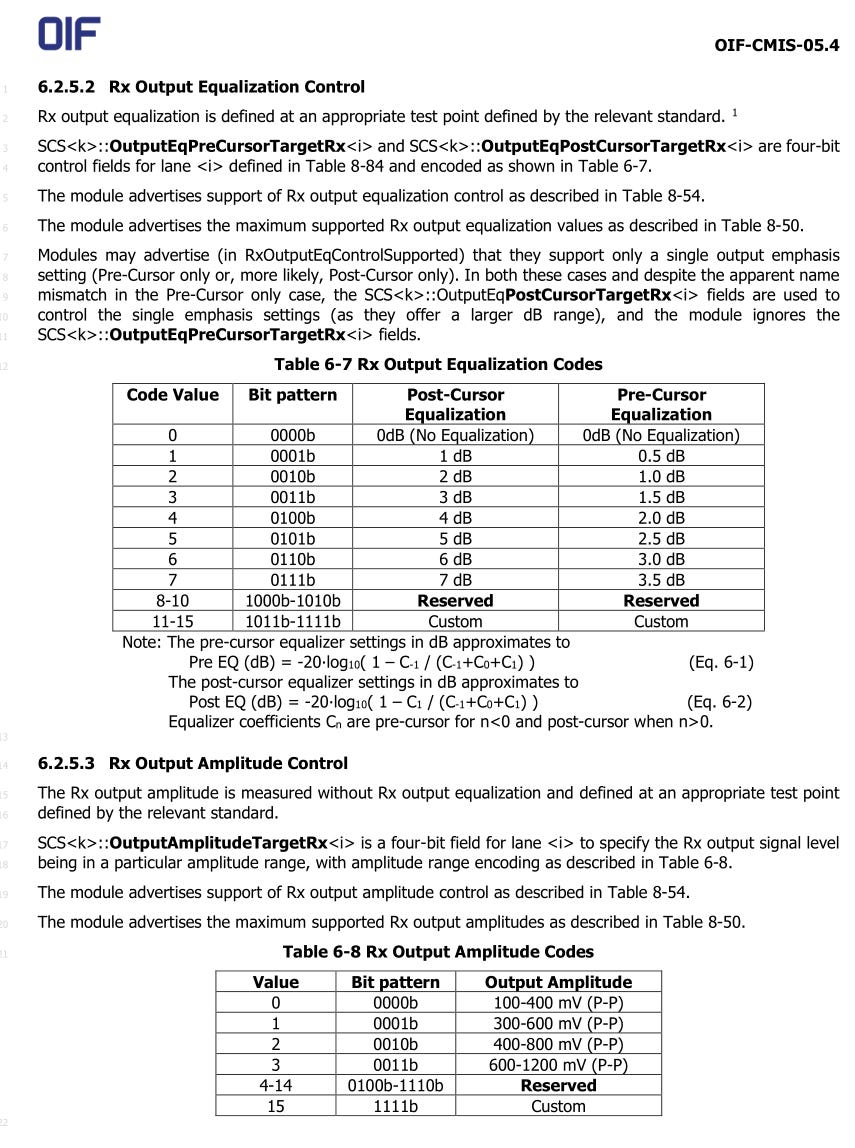
Essentially there is a register map of allowable commands between the host and the MCU inside the transceiver. In order to present a security risk, the transceiver must:
Somehow store a payload that can exploit an arbitrary code execution vulnerability on the host system.
Execute this payload via a very limited register space as the host is running normal state machine operations.
Do all of this after defeating the signed key authentication system as describe by OIF-CMIS-05.4 section 9.9.2
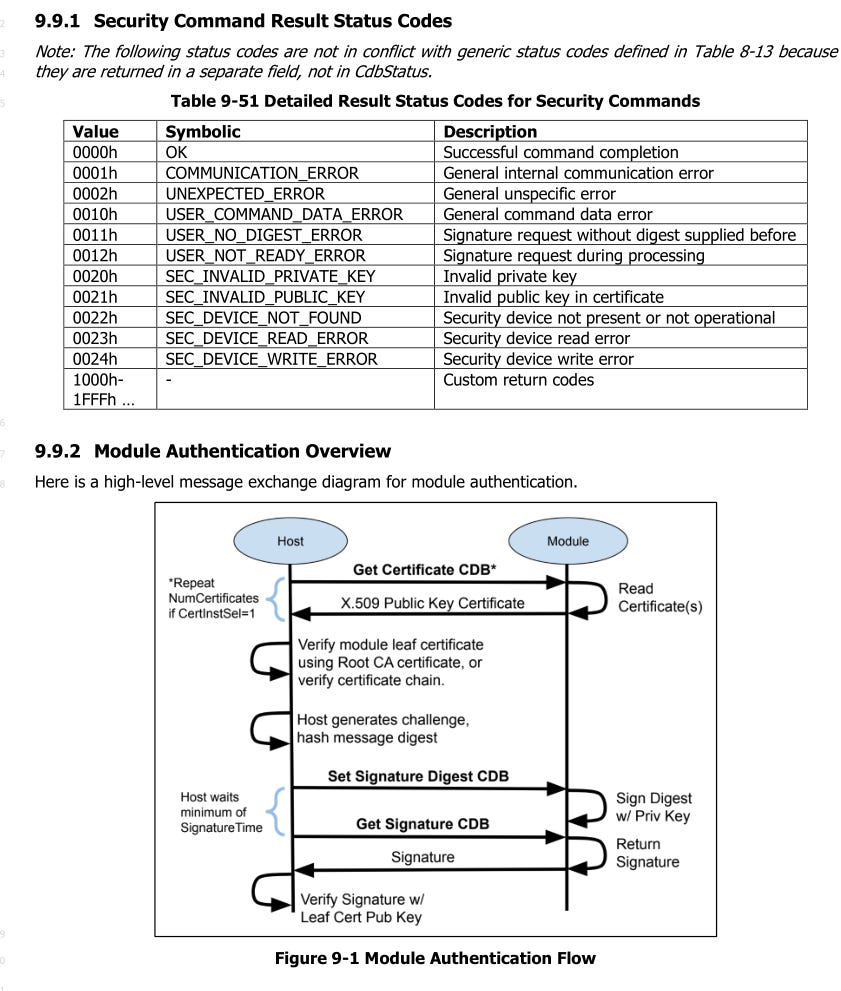
There is a signed security system via public+private keys.

[2] Overview Featuring Funda
Funda did great work and I want to add here and there. Few points of disagreement.
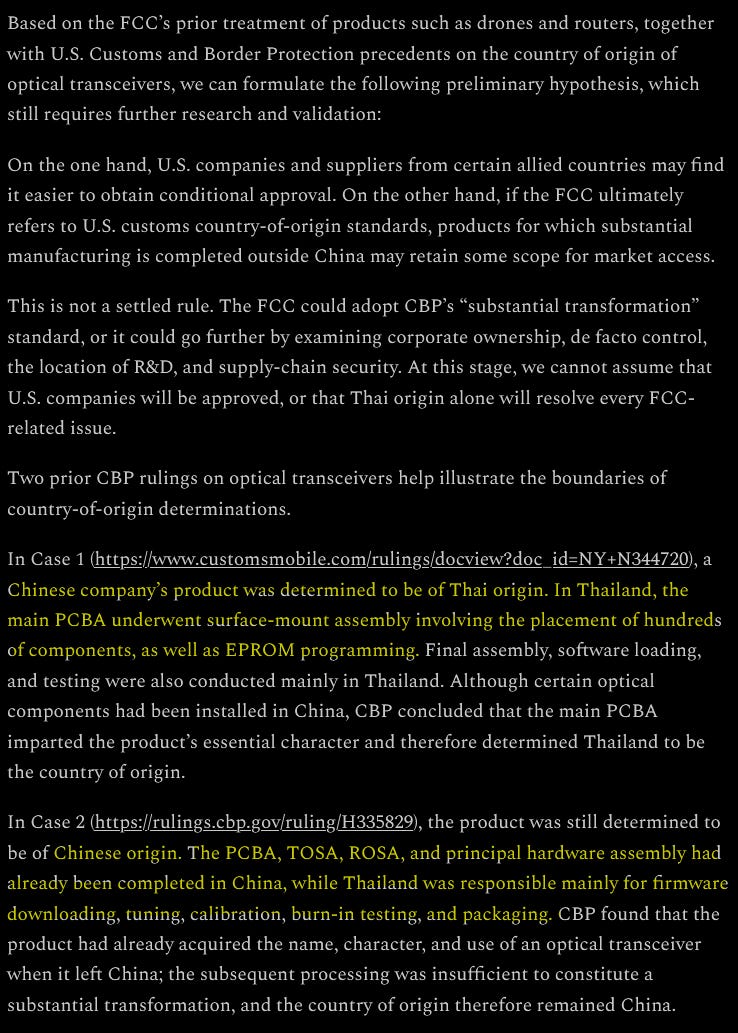
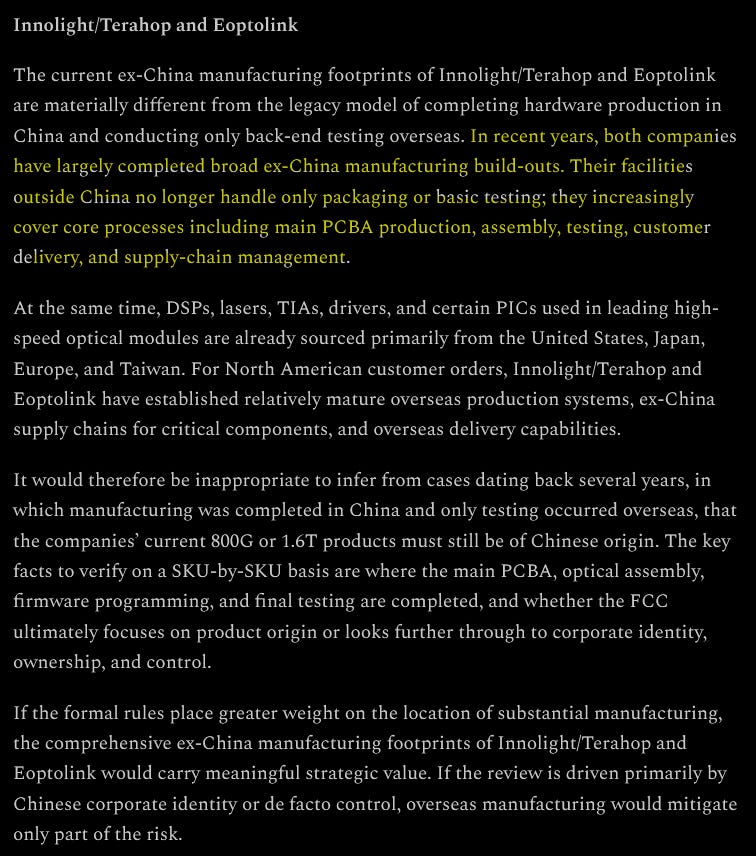
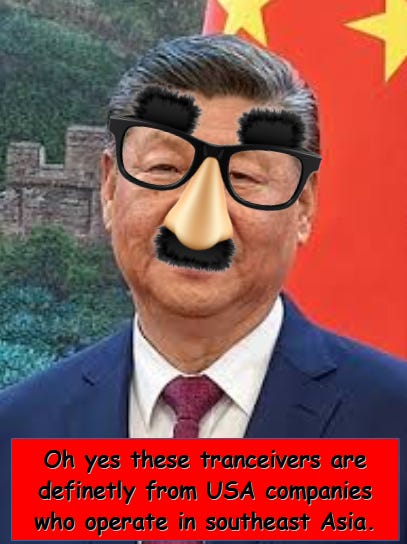
Innolight, Eopto, Accelink, and several others have created “more than a shell” companies that are USA registered but have all their footprint in southeast Asia. So Malaysia, Thailand, Vietnam, and such.
All IP (product designs, patents, know-how) is licensed to the “more than a shell”. Nearly all major production processes are done outside of mainland China. From active alignments of the TOSA/ROSA to PCB assembly, to module assembly, to burn-in test. All of the administrative stuff too.
It’s easy to get Chinese transceivers that are technically/legally “not Chinese”.
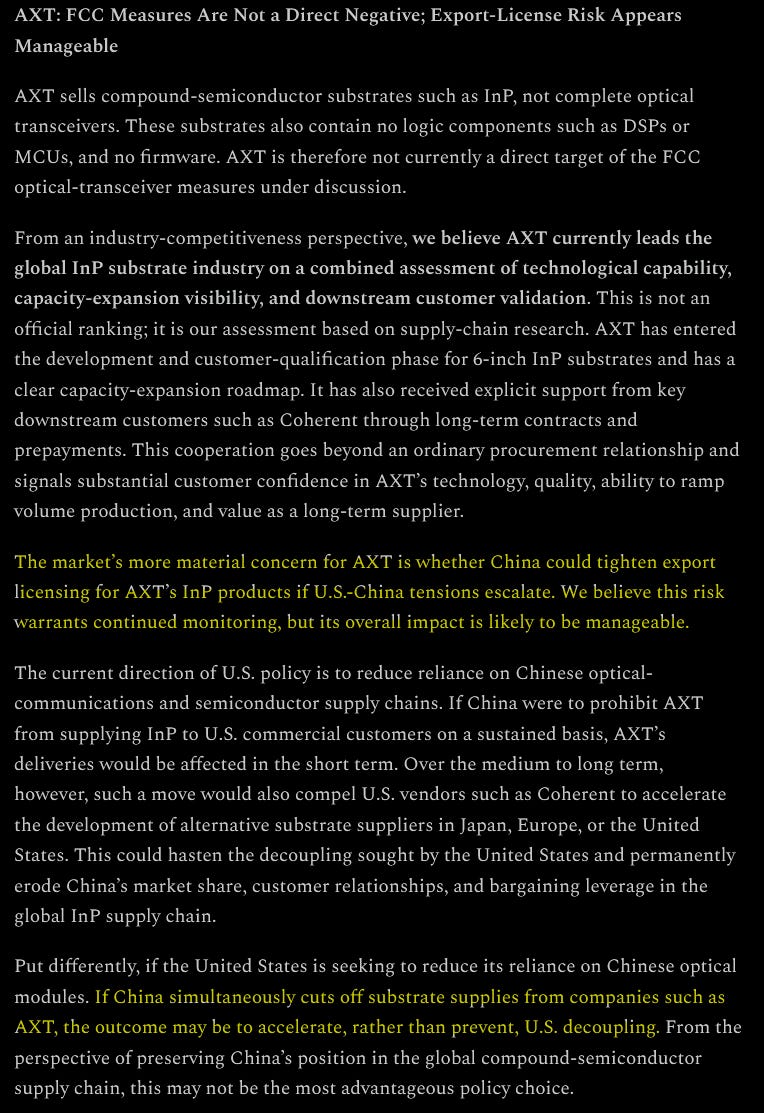
I am more cautious. China probably will retaliate and that will result in a nice 15-20% single-day drop in AXTI 0.00%↑.
Long-term, the InP wafers will make it out one way or another. More on this later.
De-coupling is the point. I’m not sure why Funda frames this in a tone as if China cares about preventing acceleration of USA de-coupling.
[3] Practical Transceiver Engineering
The key difference between China and the west in optical transceiver competence is active alignment.
Aligning optical elements (fiber, lenses, isolator, DFB, EML, SiPho PIC, photodiodes) is a nightmare. This is where your yield goes to die.
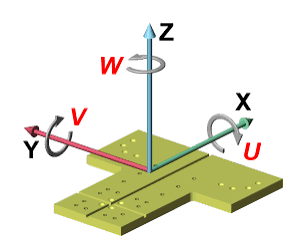
Low-single-digit micron accuracy is common. Some designs require sub-micron accuracy.
THE CHINESE ARE INCREDIBLY GOOD AT THIS. ORDER OF MAGNITUDE BETTER THAN THE WEST. THEY MAKE THEIR OWN CUSTOM MACHINES WHICH ARE ACTUALLY QUITE GOOD. WAY HIGHER YEILD, COUPLING EFFECIENCY, AND THROUGHPUT.
Companies like Lumentum and AAOI try to claim they have automated lines.
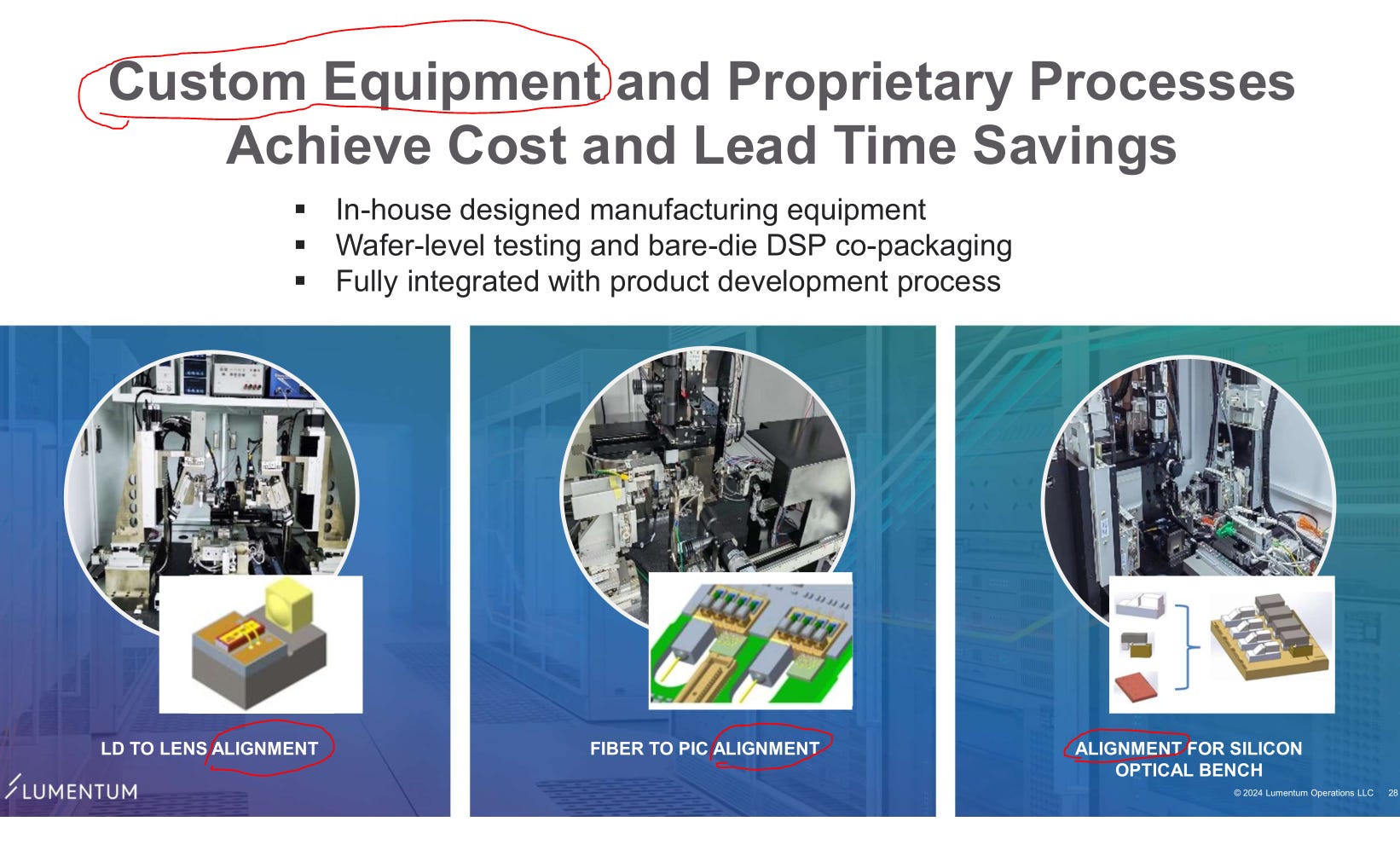
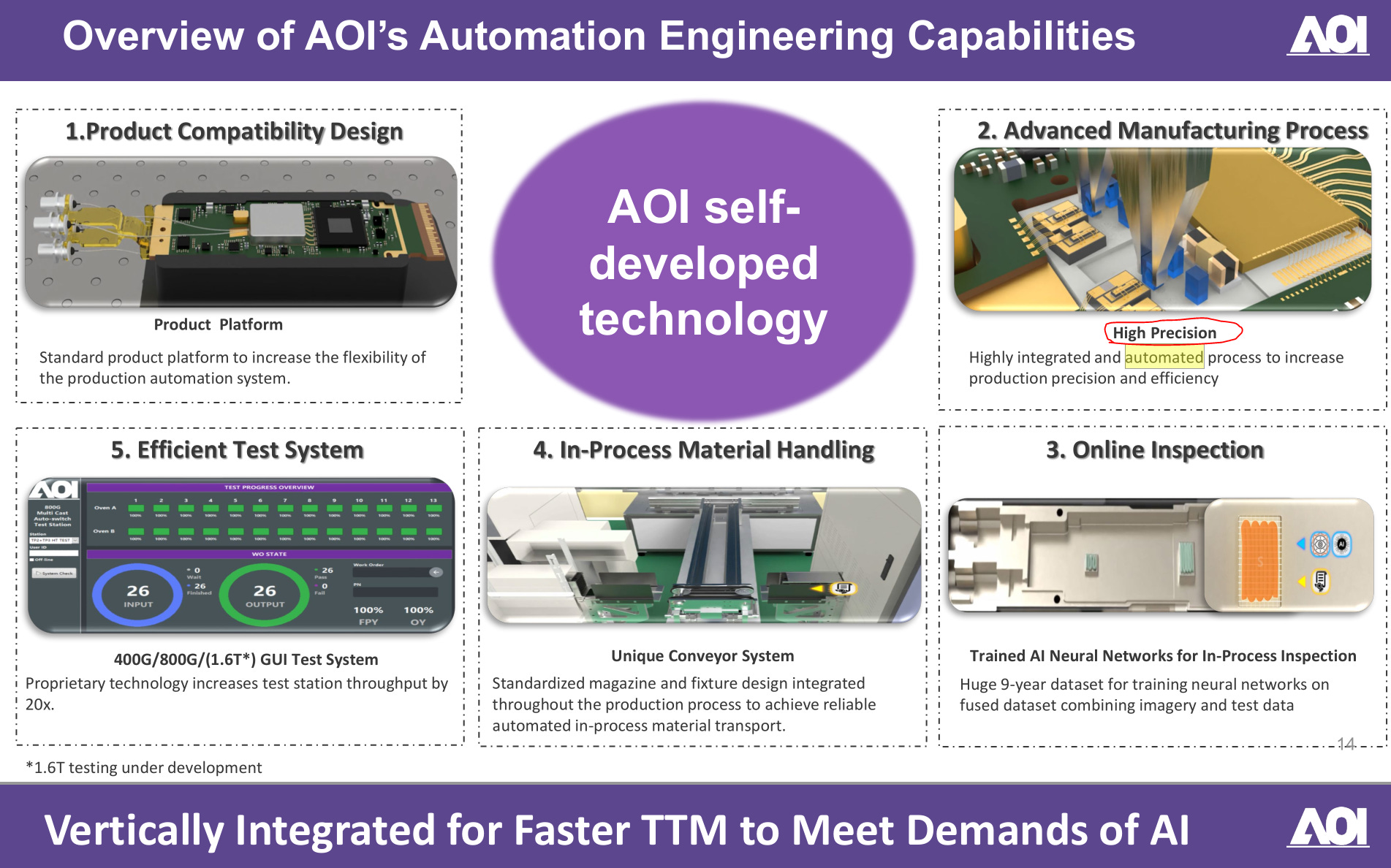
Everyone claims to have custom tooling for precise, high-TPUT active alignment.
Only the Chinese actually have it. TFC, Inno, Accelink, Eopto wipe the floor with the west.
And don’t get me started on Fabrinet.

Fabrinet is the worlds best non-Chinese optical contract manufacturer because everyone else is unusably dogshit.
Dont want to use the Chinese but also want to have hope of a viable product? Fabrinet!
The key differentiation the Chinese have in transceivers is much better active alignment. This shit is very difficult. Lot of bespoke know-how that only they have figured out.
Later in the stocks section, I need to discuss EML vs SiPho manufacturing pivot. At a high-level, SiPHo transceiver has 50% reduced InP content versus and EML based transceiver while having significantly higher active alignment content. It’s all the same shit. Everyone has a MZI-based PIC for 1.6T. It is trivial to pivot manufacturing from EML based to SiPho based. The issue is active alignment capacity/TPUT, not the design itself.
[4] Stocks, Trading, Market Vibes, and You
This news has let do a lot of chaos and it’s important to understand that even if you are right, other large market participants are wrong and more powerful. In which case you lose money while being right.
Let’s start with the most important stonk, AXTI 0.00%↑.
Long term, this ticker is going to the moon. Easily a 2-4x within the next 12-18 months. Funda and myself are bullish for the same reasons. Problem is, idiots exist and it takes one bad news piece from China to tank the stock 20% in a single day.
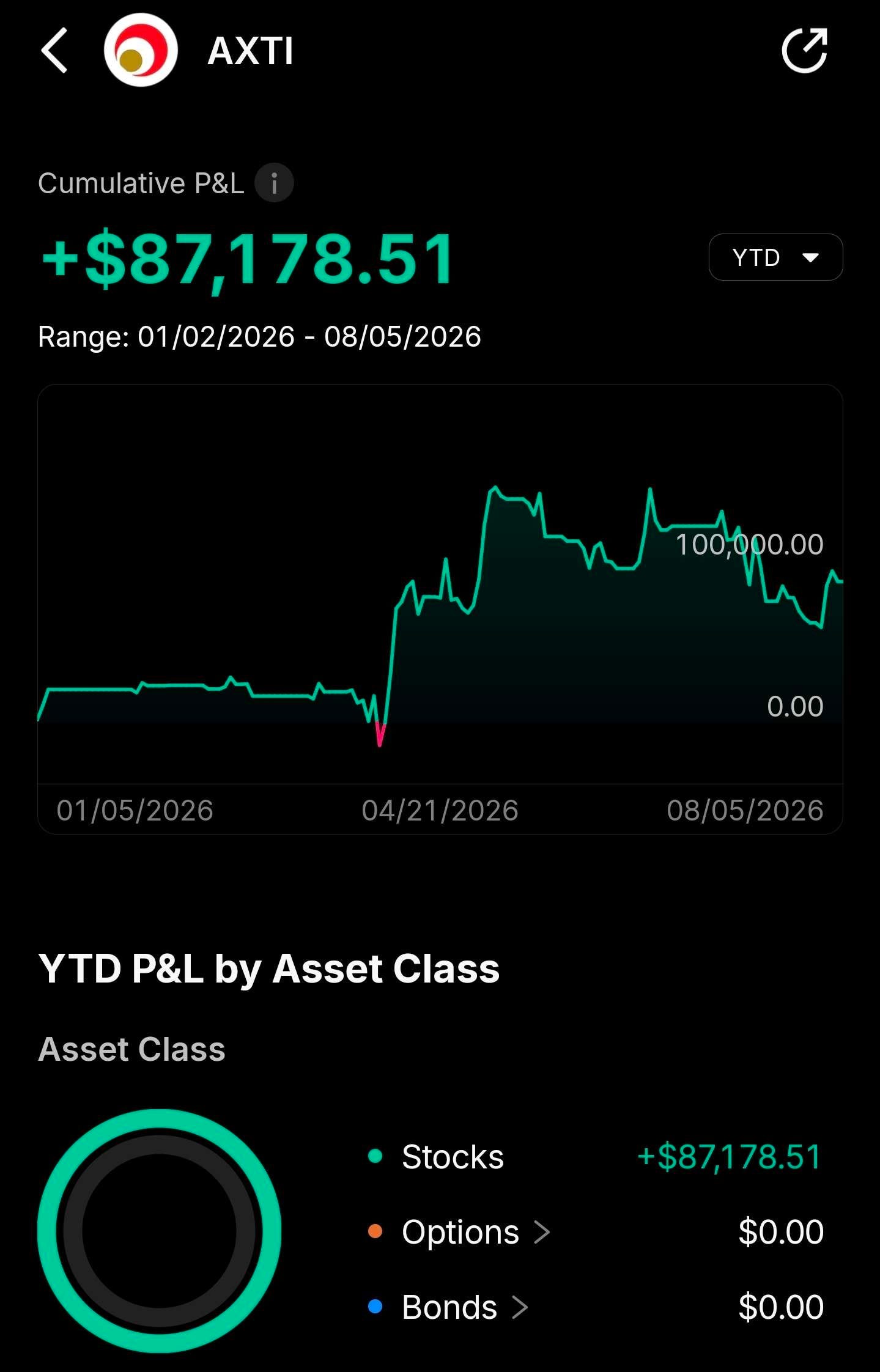
I have done ok trading this ticker. Sold out today because risk too high. Busy playing around with Sandisk and AAOI.
Seeing AXTI go down and IQE go up off this news is hilarious and tells you how much tourism there is in this sector. Idiots, where does IQE buy the InP wafers so they can epi them?
Tower went down, then went back up but weakly. Again this is stupidity.
The “more than a shell” companies will ship plenty of transceivers. Who gives a shit if Innolight logo is not on the finished part. Same PIC design ordered from Tower and shipped to Terahop.
Existing transceiver models will (probably) be allowed to continue selling and everyone has already qualed all the models so this becomes issue at 3.2T which is far away.
Lumentum, Coherent, and AAOI all use Tower for SiPho PIC so production shift means Tower still win.
Tower has unique IP via Openlight PDK for integrated InP on SiPho which is very valuable in a world where active alignment efficiency becomes a bottleneck.
Whatever happens, this is good for Lumentum, Coherent, and AAOI.
AAOI is interesting as their capacity expansion for transceivers is massive. Fun degen play that has better short-term risk/reward than AXTI in my opinion.
Fabrinet wins from these trends. They may be incompetent but they are not Chinese and their western competition even more stupid.
I don’t know why Ciena and Nokia moved from this. They play in more long haul scenarios that don’t get effected by todays news.
China cannot block InP wafer exports and USA cannot cut off transceiver imports. There is some mutually-assured destruction here. De-coupling will take 2-3 years and there will be some spicy news release and volatility along the way.
My sense is the Trump admin is trying to push hyperscalers harder. For what it’s worth, the hyperscalers have already been trying to AGRESSIVLY design-out Chinese tranceivers. Honestly I am not sure why Trump admin chose to do this. Industry was already doing the “desired” thing at a pretty brisk timeline. If you know you know.