

Irrational Analysis is heavily invested in the semiconductor industry.
Please check the ‘about’ page for a list of active positions.
Positions will change over time and are regularly updated.
Opinions are authors own and do not represent past, present, and/or future employers.
All content published on this newsletter is based on public information and independent research conducted since 2011.
This newsletter is not financial advice and readers should always do their own research before investing in any security.
Feel free to contact me via email at: irrational_analysis@proton.me
Half an hour time limit. Low effort stream of consciousness.
I went super long Intel via stock and options after the Trump deal on a simple thesis.
Trump coerce people to use 18AP.
News cycle leads to spike in stock price.
INTC is good momentum trade.
Even if this does not work, stock is near book value so downside risk maybe 20% at most.
It worked.
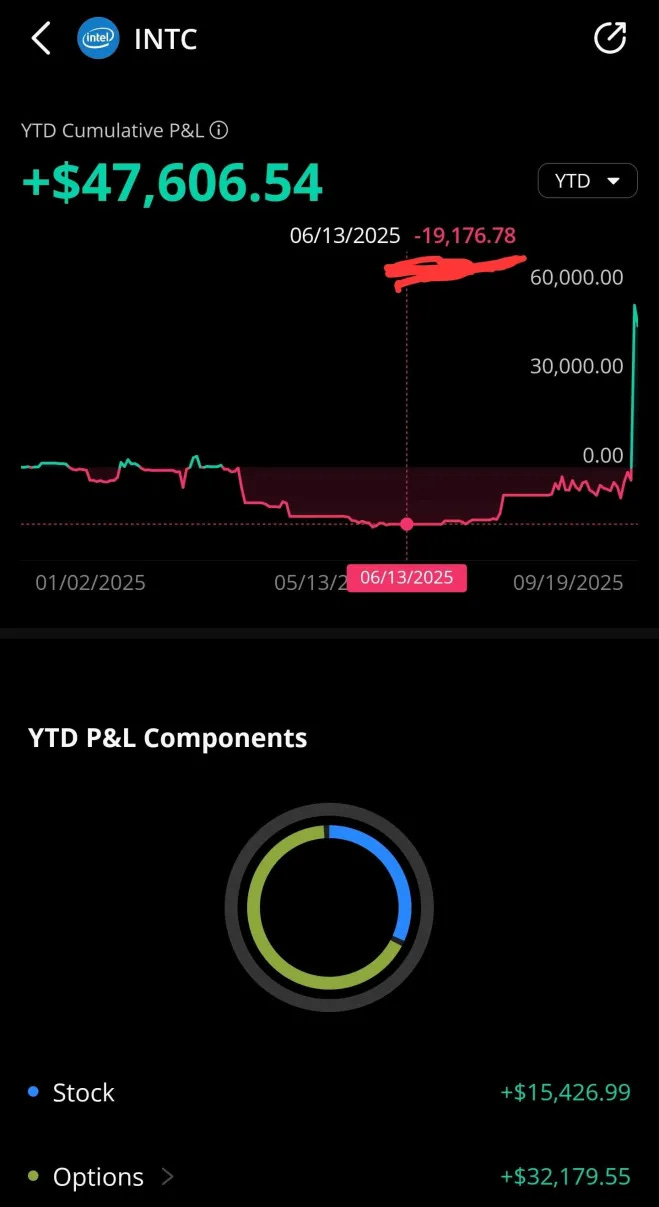
As you can see, some mistakes were made in earlier in the year.

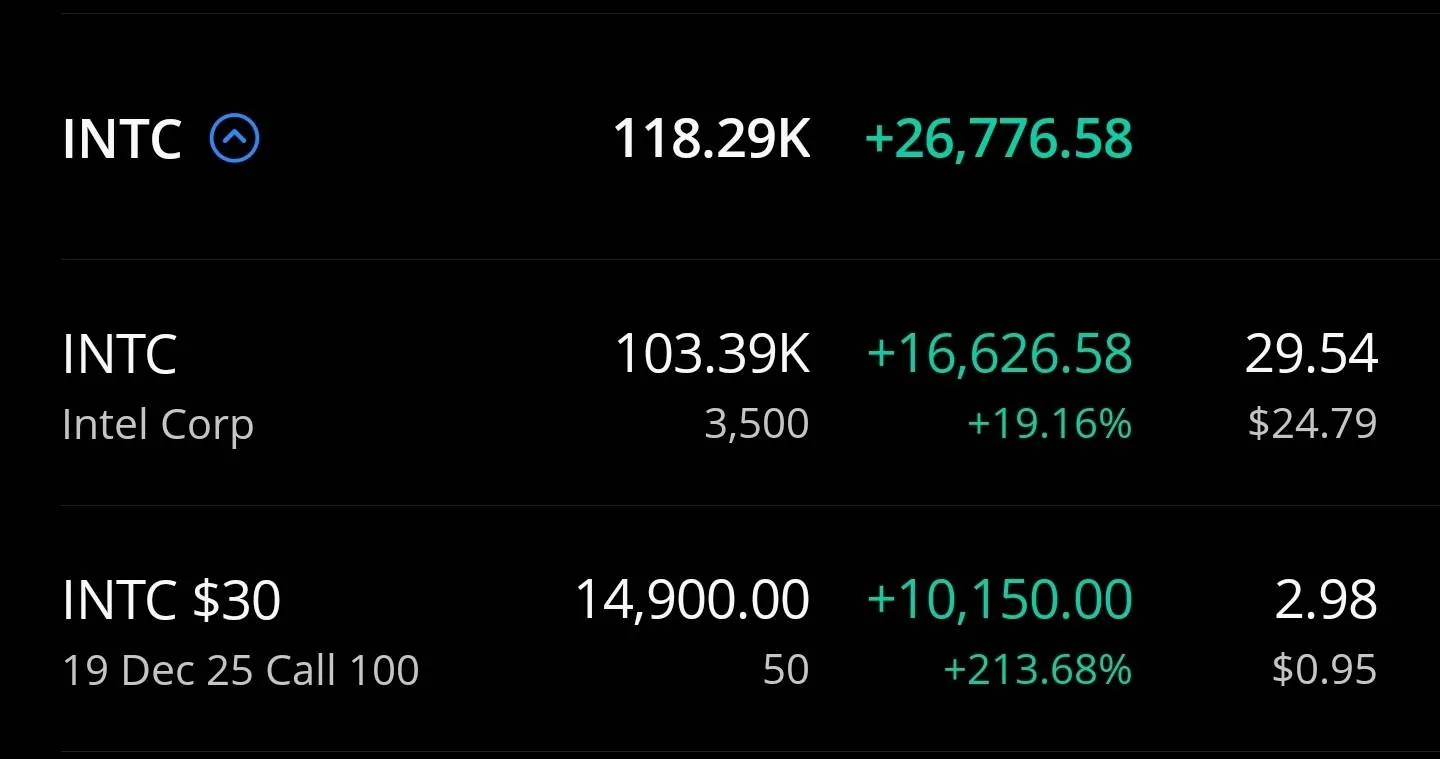
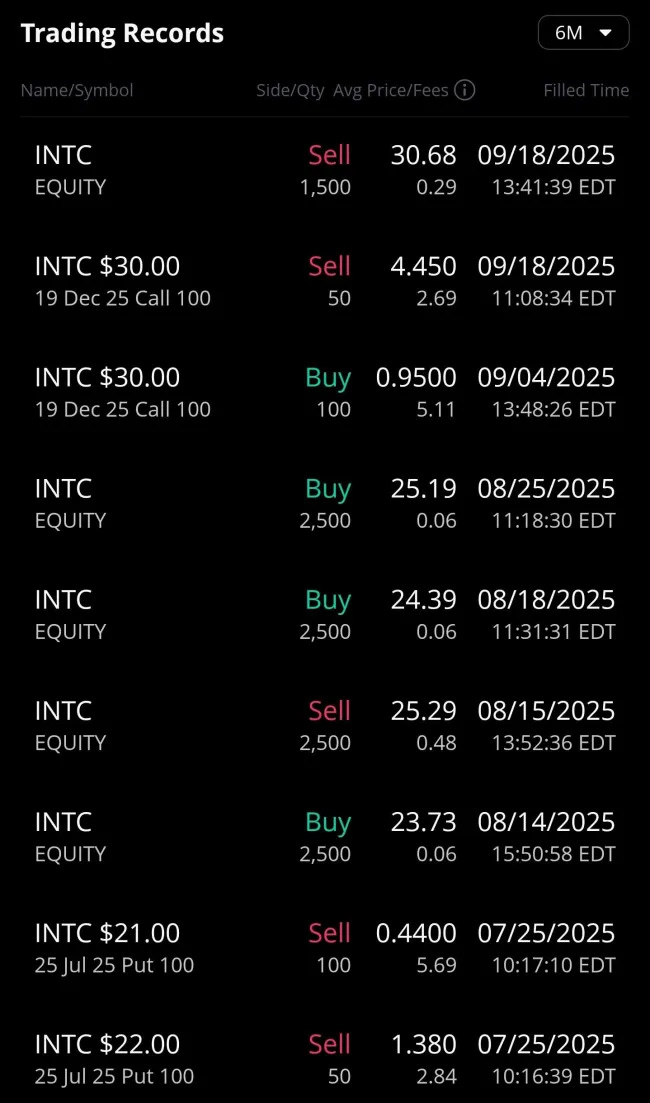
Still own a large position. Only AVGO 0.00%↑ and TSEM 0.00%↑ are larger in the trading account.
Trimmed a bit of everything to de-lever. Need to pre-pay taxes again and move some money to the long-only accounts.
Don’t want the trading account to get too big.

Anyway, the Intel position stays because I think there is enough time between now and December for one more announcement.
Maybe Microsoft AI ASIC partnership with Intel semi-custom.
Maybe Amazon NVLink Fusion CPU with Intel semi-custom.
Maybe someone actually agrees to use IFS 18AP lol.
I expected an Nvidia deal (via process of elimination) and guessed Rubin Gaming to 18AP. (completely wrong lol)

What actually happened was completely different and very surprising.
Agreement for Nvidia to use IFS advanced packaging (Foveros).
Appears to be second source of CoWoS-L style packaging.
(there is some ambiguity because Intel uses “Foveros” branding for multiple technologies.
Intel and Nvidia to collaborate on an x86 NVLink fusion CPU for future (Rubin Ultra?) AI racks.
Intel and Nvidia to collaborate on laptop chips using Nvidia graphics chiplet connected via NVlink.
Nvidia now owns 4.9% of Intel. They paid for these shares unlike Trump who simply changed chips act grants into equity.
#1 is a great win. IFS needed to get SOMETHING and advanced packaging is the easiest entry point. Hopefully the retards in that group will finally remove head from ass and deliver reasonable design rules and customer support.
#2 is a HUGE win and makes a lot of sense. There are ongoing issues with Grace (ARM-based) acting as a serious bottleneck due to shit performance. Kerneles cannot get launched fast enough to keep the GPUs fed. The joke that Nvidia Grace is “the worlds most expensive memory controller” is true. Chip is dogshit because of the ARM Neoverse V2 CPU cores.
Nvidia is working on fully custom CPU core design for Vera and this x86 project with Intel seems to be a hedge.
In the past, Nvidia has tried to design their own ARM-based custom CPU architecture and it sucked.
https://en.wikipedia.org/wiki/Project_Denver
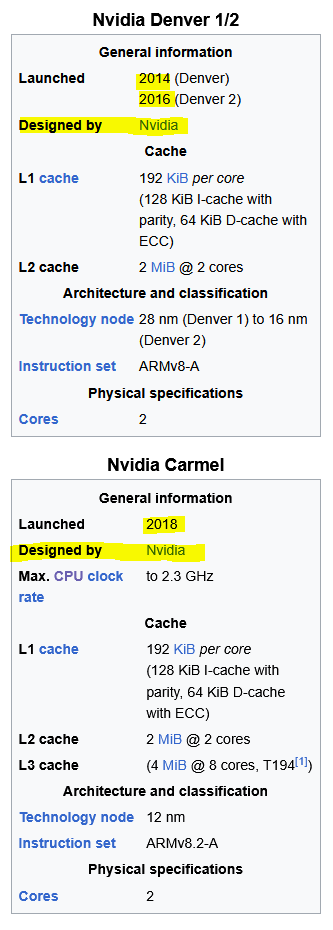
Denver 1 (2014), Denver 2 (2016), and Carmel (2018) were all trash. It is very smart of Jensen to have a backup plan or at least an alternative in case custom cores for Vera suck.
#3 is for laptops and I frankly don’t care but other people are asking so here is the short version.
This does nothing for Nvidia. It seems to just be a deal sweetener.
Intel needs to cut more OpEx and the graphics division is a prime target. I have been arguing for years that the entire Intel graphics group at Intel should have been cut down to the bone just to keep integrated GPU in laptop chips alive.
It looks like Lip-Bu Tan’s long-term (within 3-5 years) plan is to cut the entire division.
Within Windows integrated graphics, there are only three options right now:
Intel (bad but functions)
AMD (pretty good)
Qualcomm (unusable for anything 3D)
Nvidia graphics (in an integrated form) would crush all of the above but they need a competent partner to help with the boring stuff. They busy with datacenter and don’t have time for this peanut-scale market.
MedaTek was supposed to be that partner but that relationship appears to have gone south.
Imagine a future where a kickass Nvidia GPU chiplet is hybrid-bonded on top of an Intel CPU to create the worlds best laptop chip.
That future is coming. The remaining employees within Intel’s graphics department will not be part of this future.
As an aside, Intel managed to poach someone very important from ARM.
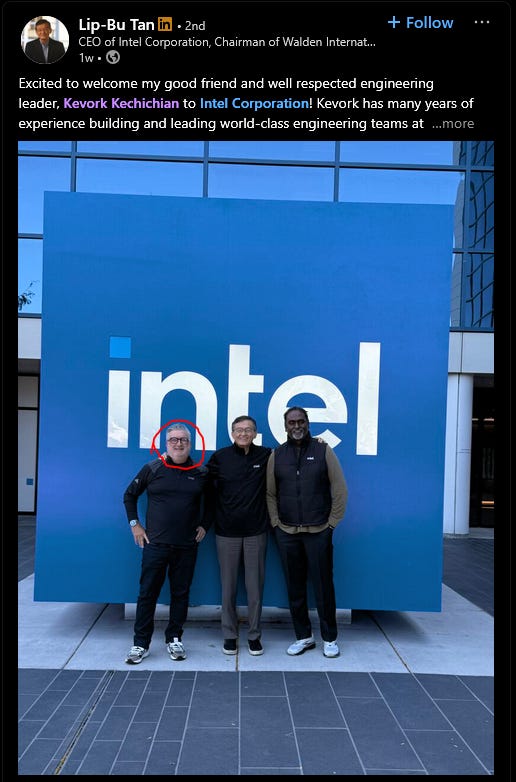
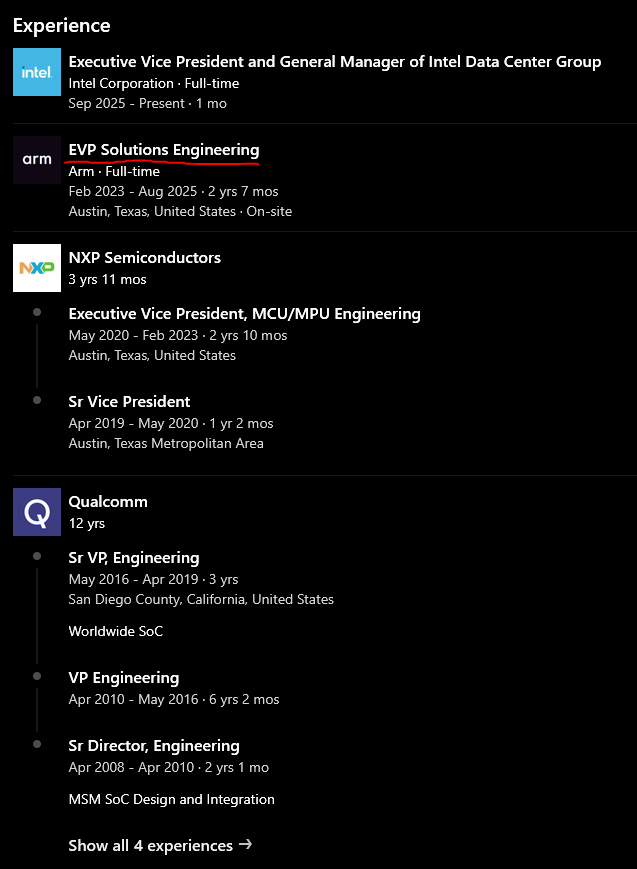
He was head of the semi-custom group at ARM. Given that he joined ARM 6-months before the IPO and likely got grants in the $50-80 range, you have to wonder why he left to join Intel at this time.
Nvidia is buying Enfabrica. This is surprising to me.
Let’s take a look at Enfabrica’s Hot Chips 2024 presentation.
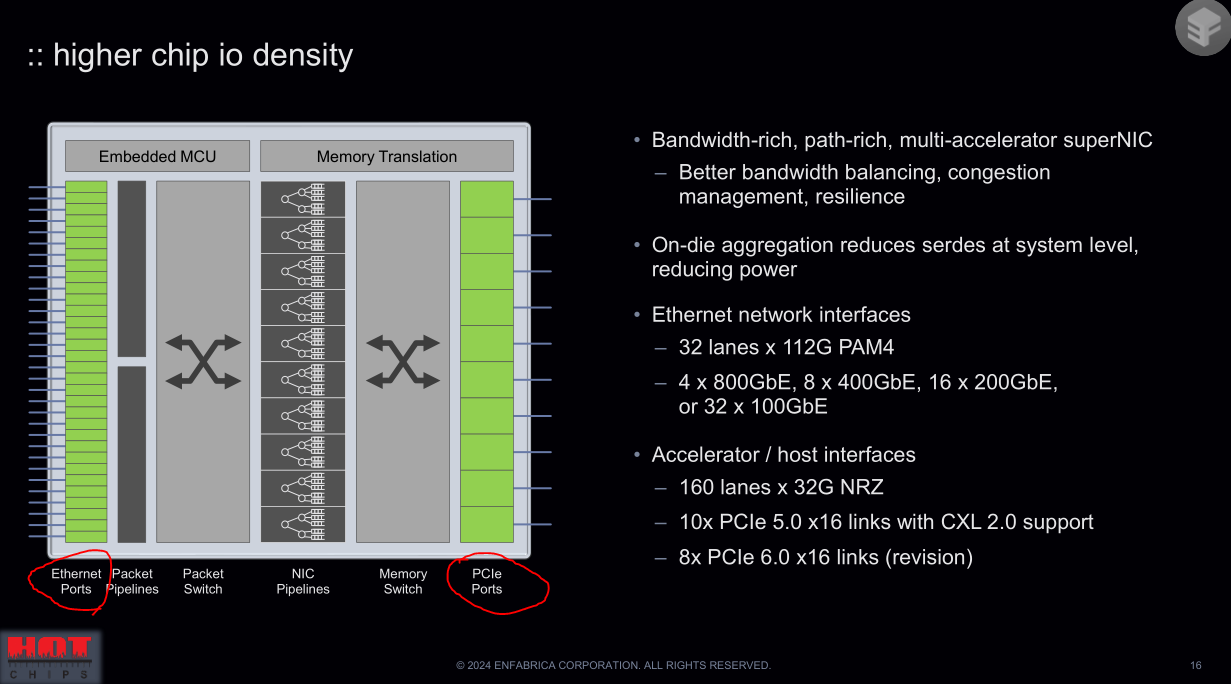
It’s basically a hybrid switch with both Ethernet and PCIe. Never understood the appeal of this.
Replacing all network cards in the system with one super-NIC-switch-thing seems cool on paper but kills a lot of the flexibility when trying to configure a network topology.
Curious to see what Nvidia does with this IP. There are benefits to the Enfabrica approach if the entire system is designed around their concept. Maybe this becomes something real in Feynmann AI rack.
If anyone here has thoughts on Enfabrica… you have my email.
Curious to see what I am missing here.
I’m not a gamer but I can only imagine the performance from an Nvidia GPU integrated with x86 CPU via the blazing fast NVLink connection. This is a leap ahead in consumer hardware the likes of which we have not seen before.
I wonder if one of those reasons why the honeymoon between Nvidia and Mediatek is apparently over has to do with the delays of the NGX SoC. Mediatek is (was supposed to be) in charge of the CPU side (cores use stock ARM designs) and overall integration of it, but something has derailed the timeline. The NGX - a cute AI Box the size of a mini-PC - is now quite late, while AMDs Strix Halo AI PCs are widely available. Don't think Jensen Huang is pleased about that.
And it adds to the impression that stock-ARM CPU designs just aren't the best match for Nvidia's accelerator GPUs.